GTIN Managed IT Blog
You want to know what’s scary? Anytime your company’s IT fails and you’re left wondering if you can afford a new piece of hardware or the maintenance to fix what’s broken. When you rely on break-fix IT, you’re basically living in a horror film; you never know when the slasher is going to leap out of the shadows and strike. With managed IT, you can sidestep the scaries and know with confidence you’re taking care of your business’ future.
Here are three reasons why managed IT is the superior option for managing your technology solutions.
Does this sound familiar? Your business is growing, but you haven’t changed your server hardware since you began operations. It’s hindering growth at this point, and you don’t know what to do. The best solution out there is to turn to the cloud. With the right implementation of a cloud-first model, you can effectively future-proof your business so it can grow unhindered.
Most of us have at least heard that an ounce of prevention is worth a pound of cure. In other words, proactivity is pretty much always the better strategy. Despite this, we’ve observed that many businesses still avoid investing in their IT until something breaks—the exact opposite of proactivity—and wind up losing in terms of downtime, recovery time, and reputation, along with the financial implications these factors introduce.
This is precisely why we’ve designed our services to serve as preventative measures against the root causes of downtime, helping you be more proactive and reduce overall costs.
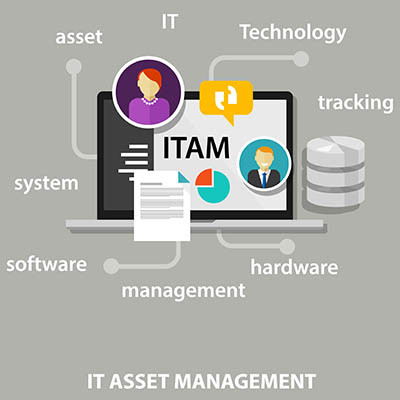
How much control do you really have over your IT assets? Oftentimes, businesses will consider other priorities, like sales, operations, and customer service, before they focus on IT systems and resources. The problem with this is that it creates a significant burden for your business, both in terms of the hidden financial drains and serious security vulnerabilities that undermine your business’ stability.
Let me ask you something: how well does your current IT support function?
If your first instinct is to say something vaguely positive, like “good” or “fine,” you’re probably missing out on significant benefits that could come from a more immersive and fleshed-out service delivery, rather than a stopgap meant to preserve the status quo. If your provider has never asked you about the future and your goals for it, it may be time to seek what else is out there.
Cybersecurity is important. Scroll through a few pages of our blog and you’ll see article after article talking about threats and ways to make yourself and your business less vulnerable to cyberthreats. As an IT professional, however, I’d be so much happier if the state of the world didn’t require such a massive effort just to protect oneself and we could just talk about cool stuff you can do with modern technology all the time!
But alas, strong cybersecurity is crucial to virtually any organization, and it’s becoming even more important by the month.
Today’s businesses are heavily reliant on technology to streamline operations and do more to enhance workforce productivity. With the multitude of technology options available, however, finding the right solutions for your business can be more difficult than it seems at first glimpse. Let’s take a look at how technology professionals can help you navigate the technology landscape and find solutions that align with your business needs.
When I was a kid, there was a Tex Avery cartoon where Droopy Dog was chasing down a crook who escaped from jail. There was a particular scene where the crook (I think it was a wolf in a black-and-white striped jumpsuit) takes a bus, a plane, a ship, and a taxi to a secluded cabin, and then closes a series of increasingly complex doors with a large number of locks, in order to hide away from the pursuing cartoon basset hound.
Of course, when he turns around, exhausted by all the effort he puts in, he realizes that Droopy is standing right behind him, and greets him with a monotone “hello.”
I haven’t seen this cartoon since I was 7 years old, but I almost always think about it when I am using multi-factor authentication.
We get it: you’d expect to read the statement “AI is everywhere nowadays” as a science fiction story about the enslavement of humans by the very machines they’ve created. We aren’t quite there yet, but more and more humans are coming to rely on artificial intelligence to automate a lot of different tasks inside their businesses. Let’s take a look at what people are actually using AI for.
Collaboration tools can be remarkably helpful for businesses, if not downright essential to their success. With the right tools that are, of course, configured the right way, you can see exponential returns on your investment as your staff enjoy the many benefits they provide. Today, we want to discuss four common pitfalls with your collaboration tool security that must be addressed.
Data is the lifeblood of a business. In the event of unforeseen circumstances such as hardware failure, malware attacks, or human error, having a well-designed backup and data recovery strategy in place becomes paramount. Today, we try and guide you through the process of creating a robust backup and data recovery strategy, ensuring the safety and accessibility of your data.
For the small business, technology is an issue; and reasonably so. For something that holds so much importance for an organization, there are bound to be problems attached. These problems can disrupt efficient workflows and ruin some situations. In this week’s blog, we will take a look at four things you can do to cut down on your technology troubles.
Most businesses who utilize the cloud report that they have managed to cut costs while still getting the resources they need to perform to spec. Businesses can use the cloud for processing and storing data, as well as application deployment, making it a very dynamic solution to a business’ needs. However, you cannot make decisions based on cost alone. Here are some other factors to consider.
Ransomware is one of the more dangerous threats out there for businesses of all industries and sizes. To help emphasize just how dangerous it is, however, you have to look past the initial threat of having to pay a ransom and look at the other risks associated with it. We’re here to try to get the point across that ransomware is something your business should absolutely be taking seriously.
Voice over Internet Protocol, also known as VoIP, has revolutionized the way businesses manage their communications through the use of telephony. Employees who were once tethered to their landlines or their physical locations can now break free of these constraints, and it’s all thanks to VoIP and cloud-based communication tools. Here are some of the best features of VoIP solutions for small businesses.
Artificial intelligence, or AI, is just one way of describing the concept of machine learning technologies. AI has grown considerably over the past couple of years, so much that automation as we know it today wouldn’t exist without it. Throw in some data-driven insights and you have a technology that has cemented itself for use in a business environment, but there are some concerns with how fast it is growing and evolving.
Digital monitoring is a bit of a contentious topic in business, but according to a survey from Gartner, it might not be as contentious of a topic as previously thought. In fact, employees are often in favor of digital monitoring under the appropriate circumstances, as long as it doesn’t get in the way of their jobs.
Artificial intelligence is a hot-button issue in today’s business technology landscape, and for good reason. It’s being implemented in various software tools and platforms with mixed results. There are some concerns over it, particularly in regard to intellectual property, but there are also major issues with it related to “the profound risks to society and humanity,” according to an open letter.